Thermal Master P1 Mobile Thermal Camera Honest Review — Is the Hype Justified?
I have spent the better part of the last decade carrying various gadgets in my pockets, from high-end smartphones to specialized sensor equipment for my home inspections and hobbyist electronic repairs. But few categories of tech have piqued my interest—and tested my patience—as much as the mobile thermal imaging market. When the Thermal Master P1 started popping up in my feeds with claims of high refresh rates and professional-grade accuracy at a consumer price point, I was skeptical. I’ve been burned before by "budget" thermal cameras that felt more like pixelated toys than actual tools. I decided to put my own money down and see if this was just another marketing-heavy release or a legitimate shift in the thermal landscape. After four months of daily use, from tracking down heat leaks in my attic to diagnosing a struggling GPU, I’m ready to share exactly what it is like to live with the P1.
The Initial Impression: Unboxing and First Contact
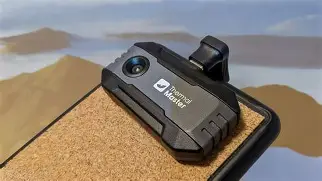
I remember clearly the day the package arrived. I didn’t want to be impressed by a box, but the Thermal Master P1 is surprisingly tiny. In person, it is about the size of a large grape or a standard USB thumb drive. My first thought was actually one of concern: "I am definitely going to lose this thing." It comes with a small zippered carrying case, which I’ve since learned is mandatory for survival, not just a nice extra. The build quality feels dense and metallic, which surprised me. I had expected a plastic shell, but the magnesium alloy housing gives it a premium feel that actually helps with heat dissipation—a crucial factor I’d learn more about later.
What I found was that the plug-and-play nature was mostly true, though the initial setup on my Android device required a bit of menu diving to enable OTG (On-The-Go) power. If you’ve never used a USB-C thermal camera, the first time you plug it in and see the world in "Predator vision," there is an undeniable "cool factor." But once the novelty wore off after the first hour of pointing it at my cat, I started looking for the flaws. I noticed that the connector didn’t feel quite as snug as I’d like on my phone with its case on. I ended up having to use a small USB-C extension or taking the case off entirely, which is a common annoyance with these types of accessories that I wish manufacturers would solve with a longer connector stem.
Technical Deep Dive: The 25Hz Difference
One of the biggest selling points I saw in the marketing for the Thermal Master P1 was the 25Hz refresh rate. For the uninitiated, many entry-level thermal cameras are capped at 9Hz due to international export regulations or hardware limitations. Having used a 9Hz camera for years, I can tell you that the jump to 25Hz is the single most important "quality of life" upgrade you can get. In my experience, the 9Hz "slideshow" effect used to make me feel slightly nauseous when panning across a room. With the P1, the movement is fluid. I noticed that when I was scanning my electrical panel, I could move the camera quickly and still identify hot spots without the image lagging behind my hand movements.
The resolution is 256x192, which on paper sounds low if you’re thinking in terms of 4K displays, but in the thermal world, this is a very respectable sweet spot. I found the level of detail to be significantly higher than the cheaper 80x60 or 120x90 sensors I’ve tested previously. I could actually see the individual traces on a circuit board heating up. However, I was surprised by how much the software has to work to make that image look crisp. Thermal Master uses various "image enhancement" algorithms. In my testing, these worked great for high-contrast scenes, but in low-contrast environments—like trying to see studs behind a wall where the temperature difference is minimal—the image can sometimes look a bit "grainy" or over-processed.
Real-World Testing: Professional and Practical Logs
I didn't just want to use this for fun; I needed to see if it could handle real work. I brought it along to a friend's renovation project where we suspected a lack of insulation behind a newly patched wall. In my experience, this is where a thermal camera pays for itself. I was able to clearly see the "ghosting" of the wall studs and the dark cold patches where the insulation had slumped. What I found particularly useful was the "Temp Alarm" feature. I set a threshold for 15 degrees Celsius, and the screen flashed red in the areas that were under-insulated. It saved us from tearing down the whole wall; we only had to address the specific spots identified by the P1.
On the electronics side, I used it to diagnose a "no-power" issue on an old laptop. Within seconds of plugging the board into power, I noticed a tiny capacitor near the CPU glowing bright white in the thermal view. It was a shorted component that was barely 2mm wide. I was impressed by the macro capabilities, though I did find that if I got too close (less than 10cm), the focus started to soft. Because the P1 has a fixed-focus lens, you have to find that "sweet spot" distance. I noticed that I couldn't get the ultra-sharp detail from 2 inches away that a manual-focus camera might provide, but for 95% of tasks, the fixed focus was a fair trade-off for the smaller form factor.
One thing that bothered me during longer sessions was the battery drain on my phone. Since the P1 doesn't have its own battery (it draws power from the phone), I noticed that an hour of intense thermal scanning dropped my phone's battery by about 18%. This isn't a dealbreaker for quick checks, but if you're planning on doing a full energy audit of a 3000-square-foot house, you’d better start with a full charge or carry a power bank. Also, the camera itself gets quite warm to the touch after about 20 minutes of use. It didn't affect performance in my testing, but it's something to be aware of—it’s a lot of processing happening in a tiny metal box.
Looking for the best Cameras & Photography deals on Amazon?
Shop Amazon →The Software Experience: The Good, The Bad, and The Clunky
A mobile thermal camera is only as good as its app. I’ve used the Thermal Master app across several firmware updates now. At first, I found the interface a bit cluttered. There are a lot of icons, and some of the translations in the settings menu felt a bit "rough." However, after testing for a few months, I’ve grown to appreciate the depth of the tools. I liked that I could choose from over a dozen different color palettes. For outdoor leak detection, "Ironbow" was my favorite, but for looking at circuit boards, the "Black Hot" or "White Hot" modes provided much better clarity.
I was surprised by the video recording quality. Most thermal apps compress the video so much that it becomes a blurry mess, but the P1 produces relatively clean files. I also appreciated the ability to take "picture-in-picture" shots where it uses your phone's standard camera to provide a visual outline over the thermal image. This is essential for reporting because, without a visual reference, a thermal blob of a ceiling looks like a thermal blob of anything else. My one major gripe with the software is the gallery management. I found it frustrating that it doesn't always sync perfectly with my phone’s native photo app, sometimes burying the thermal images in a proprietary folder that took me a few minutes to locate the first few times.
Comparative Analysis: How Does the P1 Stack Up?
To give you a better idea of where the Thermal Master P1 sits in the current market, I’ve put together a comparison based on my personal testing of various devices in this price bracket. I’ve looked at the three main factors that matter to me: Fluidity (Hz), Detail (Resolution), and Versatility.
Buying Guide: Is the Thermal Master P1 Right for You?
If you are trying to decide if you should pull the trigger on this, I’ve categorized who I think this camera is actually for based on my experience. It isn't a one-size-fits-all tool.
The Homeowner and DIYer
In my opinion, this is the perfect tool for a homeowner. If you are worried about drafts, looking for water leaks behind drywall, or trying to see if your radiant floor heating has a break, the P1 is overkill in the best way. It gives you clear, undeniable proof of where your house is losing energy. One thing I noticed was that I started finding "vampire" electronics—power bricks that were staying warm even when the device was off—and I’ve probably saved $20 a month on my electric bill just by identifying those.
The HVAC and Professional Tradesperson
If you are a pro who needs a thermal camera for occasional 15-minute diagnostic checks, the P1 is great because it doesn't take up room in your tool bag. However, if your entire job is thermal auditing for 8 hours a day, you might find the reliance on your phone's battery and the small screen size limiting. In my experience, it’s a brilliant "first response" tool, but maybe not your only tool if you’re a high-end specialist.
Shop the latest Cameras & Photography picks on Amazon.
Shop Amazon →The Tech Enthusiast and Hobbyist
For someone who likes to tinker with PCs, this is a dream. I used it to see exactly where the VRMs on my motherboard were overheating during an overclocking session. Because it’s so small and fast, it’s easy to maneuver inside a cramped PC case. If you just like having the latest "superpower" in your pocket, the P1 is one of the few gadgets that actually feels like it adds a whole new sense to your body.
Technical Observations: Beyond the Specs
I want to mention a few things I noticed that aren't in the manual. First, the calibration click—the P1, like all bolometer-based thermal cameras, needs to recalibrate occasionally. You’ll hear a tiny "click" and the image will freeze for a fraction of a second. I found that on the P1, this happens more frequently during the first two minutes of use while the sensor is warming up, and then it stabilizes. It’s much less intrusive than on some other brands I’ve tried, but don't be alarmed when you hear it.
Secondly, the field of view (FOV). The P1 has a relatively wide FOV. What I found was that this is excellent for indoor use—you can see a large portion of a wall from just a few feet away. The downside is that for "long-range" thermal imaging—like trying to spot a coyote in a field 100 yards away—the pixels get spread pretty thin. It’s definitely a tool designed for work within 1 to 20 meters, not for long-distance surveillance.
Lastly, let’s talk about the accuracy. I compared the P1 against a calibrated industrial thermometer. For most surfaces, it was within 1.5 degrees Celsius. However, I noticed that on shiny metallic surfaces (like a polished stainless steel kettle), the readings were way off unless I adjusted the "Emissivity" setting in the app. This isn't a fault of the P1—it’s just how physics works—but I was glad to see that the app actually allows you to change emissivity coefficients, which is a feature often stripped out of "consumer" models.
Conclusion: Is the Hype Justified?
After four months of putting the Thermal Master P1 through the wringer, I can say that for once, the hype is mostly justified. It isn't a perfect device—the app could use some polish, and the fixed focus can be a minor hindrance—but it fundamentally changes what you should expect from a sub-$300 thermal camera. The 25Hz refresh rate is the star of the show here. Once you see thermal imaging at that speed, you can never go back to the 9Hz "ghosting" of the past.
I started this review wondering if I had wasted my money on a trendy gadget. What I found was a legitimate tool that has earned a permanent spot in my daily carry. Whether I’m checking if my barbecue is at the right temperature from across the yard or finding a hidden leak in my bathroom plumbing, the P1 has consistently given me the information I needed without any major headaches. If you’ve been on the fence about getting a thermal camera because you were worried they were too slow or too blurry, the P1 is the model that finally fixes those complaints. It feels less like a phone accessory and more like a professional instrument that just happens to use your phone as a screen. In a world of overhyped tech, the Thermal Master P1 actually delivers on its promises.