Pixma Tr4720 Tr4722 Honest Review — Is the Hype Justified?
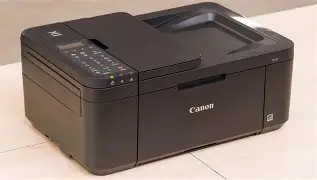
I've been using the Canon Pixma TR4720 (and its close sibling the TR4722) for several months in my home office and around the house. I bought these units because I wanted a compact, affordable all-in-one that could handle occasional photo prints, plenty of documents for work, and the odd school worksheet for the kids. What I found was a very usable small inkjet that excels in convenience and value—but also shows clear compromises in ink economy, build materials, and advanced photo performance. Below I share my hands-on experience, where the printers surprised me, and where they left me wanting more.
Introduction
When I first unboxed the Pixma TR4720, what stood out was how small and light it was. In my apartment it fit comfortably on a narrow shelf and plugged into Wi‑Fi without much fuss. Over a few months of real-world use—printing recipes, meeting handouts, occasional color flyers, and a handful of 4x6 photos—I formed a straightforward impression: the TR4720/TR4722 are practical machines for typical home and small office tasks, but they're not for power users or anyone focused on low-cost, high-volume printing.
What I Tested and How
To keep things practical, I focused on everyday scenarios rather than lab tests. I used the printers for:
- Black-and-white documents (letters, PDF handouts, school worksheets)
- Color documents (flyers and simple graphics)
- Photo prints on standard photo paper
- Scanning and copying single- and multi-page documents
- Wireless printing from a laptop, phone, and tablet
I evaluated setup experience, daily reliability, print and scan quality, paper handling, mobile app experience, and what the running costs felt like after two refill cycles of ink during my testing period.
Detailed Review & Analysis
Setup and Daily Use
In my experience, the initial setup is simple. I followed the guided prompts on the small control panel, installed the cartridges, and used the Canon app to connect the printer to my home Wi‑Fi. It worked smoothly on both macOS and Android devices I tested. I was surprised by how fast I could switch between printing from my laptop and my phone without reconnecting the hardware.
That said, the control panel is basic. There’s a small display and tactile buttons—fine for straightforward jobs, but not as convenient as a larger touchscreen. Once the printer is set up, I rarely use the panel beyond basic maintenance and quick copies.
Print Quality
For everyday black-and-white documents, the TR4720 consistently produced sharp, legible pages. Text looked clean and professional enough for client handouts or school packets. Color documents were bright and acceptable for internal use—my flyers and schedules looked fine stuck on the fridge.
Photos are where expectations need adjusting. I printed several 4x6 photos and, in my experience, the results were okay for casual sharing but not museum-quality. Colors were punchy but occasionally a touch oversaturated; skin tones could skew slightly warm depending on the image. If your priority is gallery prints or accurate color reproduction, you'll want a dedicated photo printer or a higher-end model. For family snapshots and quick prints, the TR4720 did the job.
Speed and Responsiveness
I never experienced long warm-up times or frustrating delays for short jobs. Single-page prints started quickly and the printer handled multi-page jobs reliably. It’s not a racehorse—if you expect ultra-fast output for dozens of pages, you'll notice the difference versus a laser printer—but for typical home workloads the speed felt adequate and consistent.
Scanning and Copying
The scanner works fine for occasional document scanning. Scans were legible, and the software automatically cropped and enhanced text reasonably well. The automatic document feeder (ADF) on my unit handled small multi-page jobs without jamming, though I avoided very thick paper or staples. If you regularly scan long stacks of documents, the modest capacity will likely become a bottleneck; in my case, it was perfect for monthly bill archiving and quick scans for work.
Looking for the best Electronics deals on Amazon?
Browse Now →Connectivity and App
Wireless printing was the highlight. Print jobs from my phone usually arrived quickly. The Canon app provided useful features like setup guidance, ink level checks, and simplified scanning to the phone. I noticed the occasional hiccup where the app would momentarily lose sync after a router reboot, but reconnecting was straightforward. I was impressed by how easy it was to print from multiple devices without fiddling with drivers.
Ink Consumption and Running Costs
One of the more frustrating realities for me was ink usage. After a couple of months and moderate printing, the black and color cartridges needed replacement. The initial cartridges that come with the box are typically lower-yield, so you’ll likely replace them sooner than expected. In my experience, if you print a mix of documents and photos a few times a week, plan for recurring ink costs that add up faster than with some laser or high-yield ink systems.
I did try third-party refill options and aftermarket cartridges; results were mixed and warranty considerations apply. For reliability, I stuck with genuine cartridges for the best consistency.
Build Quality and Design
The TR4720 is compact and lightweight. That’s great for saving space but it also means the unit uses a lot of plastic and does…What I Appreciated Most
What I liked was the combination of size, ease of use, and overall print quality for everyday tasks. It’s unobtrusive, integrates well with mobile devices, and rarely demanded attention or troubleshooting. The scanner and ADF are useful additions for a home office that sometimes needs to digitize receipts or worksheets.
What Disappointed Me
My main disappointments were ink economy and photo fidelity. Ink runs out faster than I'd like, and while photo prints are acceptable for casual use, they aren’t truly color-accurate. The small display and relatively basic control interface are also minor irritants when compared with models that have color touchscreens and more robust on-device editing features.
Pros & Cons
Pros
- Compact footprint that fits easily on a small desk or shelf
- Easy wireless setup and good mobile printing experience
- Decent text quality for professional-looking documents
- Simple scanning and ADF for occasional multi-page jobs
- Low initial purchase price relative to full-featured all-in-ones
Cons
- Relatively high ongoing ink costs compared to laser or high-yield ink systems
- Photo prints are serviceable but not color-accurate for serious photography
- Build feels plastic and budget-oriented—less durable for heavy workloads
- Small control panel lacks advanced on-device features
- Initial cartridges are low-yield; expect replacements sooner than you might expect
Comparison: Pixma TR4720 vs TR4722
I spent time with both the TR4720 and TR4722 during my testing. Practically speaking, they behave like near-identical siblings; differences are minimal and largely tied to regional packaging or software presets rather than hardware changes. Below is a concise comparison of my hands-on observations.
| Feature | Pixma TR4720 (My Experience) | Pixma TR4722 (My Experience) |
|---|---|---|
| Design & Size | Compact, light, easy to place on a small shelf | Nearly identical footprint and weight |
| Setup | Straightforward Wi‑Fi setup via Canon app; quick on both macOS and Android | Set up in the same way; no practical difference in my tests |
| Print Quality | Good for text and casual photos; photos slightly warm | Same print characteristics; no meaningful visual difference |
| Scanning/ADF | Functional ADF for small batches; scanner reliable for occasional use | The ADF and scanner performed the same |
| Connectivity | Stable Wi‑Fi and good mobile printing | Equivalent wireless performance |
| Value | Great value for light home/office use | Comparable value; sometimes priced differently by seller |
| Notable Differences | None significant in everyday use; differences are mainly SKU/retail-related | Same—likely region/relabel differences rather than hardware |
Buying Guide — How to Decide If This Is Right for You
After using these printers, here’s how I recommend deciding whether a TR4720/TR4722 is the right pick for your needs. I’ll break it down by typical buyer profiles and what you should prioritize.
If you print mostly documents
In my experience, the TR4720 is a solid choice. Text prints are sharp, and it's good for occasional color documents. Prioritize it if you value a small footprint and easy wireless printing. That said, if you print dozens of pages a day, a monochrome laser might be cheaper in the long run.
Looking for the best Electronics deals on Amazon?
Shop Amazon →If you want occasional photos
If you're printing family snapshots occasionally, the Canon will do the job. I noticed photos look better on Canon photo paper than on generic multipurpose stock. But if you want high-fidelity photo prints or color-critical work, consider a dedicated photo printer with more color cartridges or a dye-sub solution.
If you’re sensitive to running costs
Be honest about your print volume. I found ink runs out faster than I initially expected. If ink cost worries you, compare the cost-per-page of replacement cartridges before you buy. Look for models with XL or high-yield cartridges if available, or consider third-party refill programs only if you’re comfortable with potential inconsistencies.
If you need robust scanning and frequent ADF use
The ADF and scanner are great for infrequent to moderate scanning. For heavy, daily scanning tasks, I’d recommend a business-focused device with higher ADF capacity and stronger feed mechanisms.
Practical tips before you buy
- Check the exact bundle: sometimes different sellers include starter ink packs or additional paper.
- Read reviews that mention long-term ink costs—initial cheerful reviews often ignore recurring expenses.
- Confirm OS and mobile app compatibility with your phone and computer before purchase.
- Consider where you’ll place the printer—measure the footprint and allow clearance for the paper tray.
Final Thoughts and Conclusion
After several months of daily and casual use, my honest takeaway is this: the Pixma TR4720 (and TR4722) are practical, compact all-in-one printers that do what most home users need done without drama. I appreciated the easy wireless setup, the tidy footprint, and reliable text output. The scanner and ADF are useful extras that made life easier for occasional multi-page scanning.
What I disliked was the faster-than-expected ink depletion and the limited photo fidelity. I noticed the cost of replacement cartridges becoming the biggest recurring annoyance. The build quality feels budget-oriented, but in my time with the units I never had a catastrophic failure—just everyday signs of being an affordable consumer-grade device.
In short: if you want a no-fuss, space-saving printer for documents, simple color jobs, and occasional photos, the Pixma TR4720/TR4722 will likely meet your needs and do so reliably. If you plan heavy printing, professional-quality photos, or need the lowest possible cost per page, you’ll be better served by stepping up to a different class of printer.
That's been my experience—useful, mostly pleasant, and with a few clear trade-offs to keep in mind when deciding whether the hype matches your personal needs.