I Switched to the Edifier G2000 Pro and Here is What Happened
In the landscape of modern desktop audio, the transition from traditional bookshelf speakers to specialized gaming speakers often comes with a degree of skepticism. Audiophiles generally prefer neutral sound signatures and large drivers, while gamers prioritize low-latency connections and aesthetics that match their glowing PC builds. The Edifier G2000 Pro attempts to bridge this gap, serving as a successor to the widely popular G2000. Switching to this setup represents a shift in philosophy for the desktop user: moving away from bulky, wired-heavy configurations toward a compact, versatile, and digitally integrated experience. This article explores the nuances of that transition, examining how these small drivers handle the complexities of modern media and whether the "Pro" moniker is truly earned through performance upgrades.
The Evolution of Desktop Audio
For years, the standard for desktop audio was either a pair of cheap plastic speakers that came bundled with a PC or a massive 2.1 system that required a dedicated subwoofer under the desk. As workstations have become cleaner and more minimalist, the demand for high-quality audio in a small footprint has skyrocketed. The Edifier G2000 Pro enters a market where space is at a premium but expectations for soundstage and clarity remain high. The shift to a "Pro" model typically implies improvements in internal components, such as the digital-to-analog converter (DAC), power output, or connectivity options. In the case of the G2000 Pro, the focus is squarely on providing a Hi-Res certified experience without the need for an external amplifier or a spaghetti-mess of cables.
When making the switch to a compact system like this, the first thing a user notices is the reclamation of desk real estate. The G2000 Pro speakers are surprisingly diminutive, yet they feel substantial. They occupy a footprint roughly the size of a large mug, making them ideal for those using dual-monitor setups or small gaming desks. However, the true test of a speaker switch isn't just how much space is saved, but how much sound is lost or gained in the process. Traditional wisdom suggests that "there is no replacement for displacement," meaning larger speakers always sound better. The G2000 Pro challenges this by utilizing advanced Digital Signal Processing (DSP) to squeeze every bit of frequency response out of its 2.75-inch full-range drivers.
Deep Dive: Performance and Sound Signature
The sound signature of the G2000 Pro is characterized by a "V-shaped" profile that has been refined through its EQ modes. Upon initial setup, the speakers offer three distinct presets: Music, Game, and Movie. Each mode adjusts the internal DSP to emphasize specific frequency ranges. In Music mode, the speakers attempt to provide a flatter, more balanced response. While they cannot defy the laws of physics regarding sub-bass, the mid-bass is punchy and tight. For acoustic tracks and vocal-heavy music, the clarity is impressive, often surprising those accustomed to the muffled output of generic desktop units.
Switching to Game mode is where the "gaming" lineage of the HECATE brand becomes apparent. In this mode, the DSP emphasizes footsteps, weapon reloads, and spatial cues. For a 2.0 system without a dedicated center channel or surround satellites, the G2000 Pro does a commendable job of creating a wide soundstage. In titles like tactical shooters or immersive open-world RPGs, the directional audio is sharp enough to provide a competitive advantage. The highs are crisp without being overly sibilant, ensuring that high-frequency effects like breaking glass or shimmering magic spells don't become fatiguing over long sessions.
In Movie mode, the speakers widen the soundstage even further and provide a "phantom" bass boost. This is particularly useful for cinematic trailers and action sequences. While it won't shake the floor like a 12-inch subwoofer, the vibration-dampening pads on the bottom of the units ensure that the desk doesn't rattle, keeping the low-end frequencies clean and localized. The switch to the Pro version also brings 24-bit/96kHz Hi-Res audio support through the USB connection, which is a significant jump for users who previously relied on standard 3.5mm motherboard audio. This digital connection bypasses the often noisy internal circuitry of a PC, resulting in a lower noise floor and better dynamic range.
Hardware Design and Build Quality
The aesthetic of the G2000 Pro is undeniably modern. The hexagonal cabinets are made of a high-grade plastic that feels dense and non-resonant. One of the main reasons users switch to these speakers is the RGB integration. Edifier has implemented a subtle yet effective lighting system on the rear and sides of the units. Unlike cheaper alternatives where the LEDs are harsh and distracting, the G2000 Pro offers a "breathing" glow that reflects off the back wall, contributing to the ambiance of a gaming setup without washing out the monitor screen.
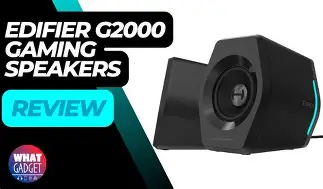
The controls are located on the side of the primary speaker. A mechanical lever-style volume switch provides tactile feedback that is far more satisfying than a standard plastic knob. This lever also acts as a toggle for the EQ modes and the input selection. The connectivity suite is one of the strongest reasons for the upgrade. With Bluetooth 5.3, USB-C, and 3.5mm AUX inputs, these speakers can simultaneously connect to a PC, a smartphone, and a console. The low-latency Bluetooth is particularly noteworthy; switching to a mobile device to play music or take a call results in virtually no lag, a common complaint with older Bluetooth speaker versions.
Looking for the best Electronics deals on Amazon?
Browse Now →Technical Specifications Comparison
To understand the impact of switching to the G2000 Pro, it helps to see how it compares to its predecessor and standard entry-level desktop monitors.
| Feature | Standard Desktop Speakers | Original G2000 | G2000 Pro |
|---|---|---|---|
| Driver Size | 2.0 - 2.5 inches | 2.75 inches | 2.75 inches (Enhanced Shielded) |
| Peak Power | 10W - 20W | 32W | 40W |
| Hi-Res Audio | No | No | Yes (24-bit/96kHz) |
| Bluetooth Version | 4.2 / 5.0 | 5.1 | 5.3 |
| Input Ports | 3.5mm only | USB, AUX, Bluetooth | USB-C, AUX, Bluetooth, Sub-out |
| Frequency Response | 120Hz - 18kHz | 98Hz - 20kHz | 95Hz - 20kHz |
What Happened After the Switch: Real-World Use Cases
The transition to the G2000 Pro usually highlights three major changes in the user experience: cable management, audio versatility, and atmospheric immersion. From a cable management perspective, the inclusion of a USB-C connection is a game-changer. For laptop users who use a docking station or have limited ports, being able to run a single cable for both power and high-resolution data simplifies the desk layout immensely. During testing, the transition from a messy 3.5mm and separate power brick setup to the streamlined G2000 Pro layout made the workspace feel significantly more professional.
From a versatility standpoint, the "Switch" became literal. Because the speakers support multiple inputs, the G2000 Pro serves as a hub. A user can have their work PC connected via USB, their gaming console via the AUX port (through the monitor), and their phone via Bluetooth. The ability to toggle between these sources with a quick tap of the side button means no more unplugging cables when switching from work to play. This is a primary draw for the modern "hybrid" user who uses the same desk for 40 hours of work and 20 hours of gaming per week.
Atmospheric immersion is the most subjective but perhaps most important result of the switch. In a quiet room, the G2000 Pro provides a clarity that standard sp…
Pros and Cons of the Edifier G2000 Pro
No audio switch is perfect, and while the G2000 Pro offers substantial upgrades, it has specific limitations that potential buyers should consider before making the jump.
- Digital Fidelity: The Hi-Res certification isn't just a sticker; the USB-C connection provides a noticeably cleaner signal than the standard analog input, especially on older motherboards with poor shielding.
- Tactile Controls: The mechanical volume lever is a standout feature, providing a premium feel that is rare in this price bracket.
- Compact Aesthetic: The small footprint allows them to fit under almost any monitor, making them perfect for "clutter-free" enthusiasts.
- RGB Customization: Multiple lighting modes allow the speakers to blend into any color scheme, and the ability to turn them off entirely caters to those who prefer a stealth look.
- Subwoofer Output: Unlike many compact 2.0 systems, the G2000 Pro includes a dedicated sub-out port, allowing for a future upgrade to a 2.1 system if the user desires more "thump."
- Sub-Bass Limitations: Due to the 2.75-inch drivers, the speakers naturally roll off at the 95Hz mark. You will not get bone-shaking bass without an external subwoofer.
- Proprietary Interconnect: The cable connecting the left and right speakers is a proprietary multi-pin connector, meaning you cannot easily swap it for a longer or higher-quality third-party cable.
- No Headphone Jack: There is no output for headphones on the speakers themselves, which may be a drawback for those who frequently switch between speakers and headsets.
- EQ Rigidity: While the three modes are well-tuned, there is no dedicated software to create a custom 10-band EQ curve stored on the device hardware.
The Ultimate Buying Guide: Is the Switch Right for You?
Deciding to switch to the Edifier G2000 Pro depends largely on your current audio situation and your priorities for your desktop environment. To help in the decision-making process, consider the following personas and how this specific model fits their needs.
The Minimalist Gamer
If you are someone who hates clutter but loves the "gamer" aesthetic, the G2000 Pro is almost unrivaled. Most gaming speakers are either too large or look like cheap toys. The build quality here is professional, and the RGB is tastefully executed. If your current speakers are taking up too much room or you are currently using monitor built-in audio, the switch will feel like a massive ergonomic and sonic upgrade.
The Hi-Res Newbie
For users who have heard about Hi-Res audio but don't want to spend hundreds on a DAC/AMP stack and passive speakers, the G2000 Pro is an excellent entry point. It handles the conversion internally, allowing you to experience high-bitrate tracks from services like Tidal or Apple Music with ease. If you currently use a standard 3.5mm jack and hear a "hissing" or "buzzing" sound when your PC is under load, moving to the USB-C connection of the G2000 Pro will solve that interference immediately.
Looking for the best Electronics deals on Amazon?
View Offers →The Console and PC Hybrid
If your setup involves a monitor that serves both a PC and a PlayStation 5 or Xbox Series X, the G2000 Pro is highly recommended. The multiple inputs allow you to keep everything connected. Since most modern consoles lack an optical out, having speakers that can take audio from the monitor's 3.5mm out while staying digitally connected to the PC makes for a seamless transition between platforms.
When Not to Switch
You should reconsider this switch if you are coming from a high-end 2.1 system or large 5-inch studio monitors. If you are used to the physical impact of a dedicated subwoofer, no amount of DSP "magic" in a 2.0 system will satisfy that craving for deep, physical bass. In that scenario, you would be better served either keeping your current system or budgeting for an additional subwoofer to plug into the G2000 Pro's sub-out port.
Installation and Setup Tips
When you finally make the switch, the way you set up the G2000 Pro can significantly impact the sound quality. Because these are small drivers, they are highly directional. It is recommended to "toe-in" the speakers, meaning you should angle them slightly inward so they are pointing directly at your ears rather than straight ahead. This creates a more focused center image and improves the perceived soundstage.
Furthermore, since these are rear-ported speakers (they have a hole in the back to help move air for bass), placement relative to the wall is crucial. If you place them directly against a wall, the bass might become "boomy" and muddy. Leaving about 2 to 4 inches of space behind the speakers allows the ports to breathe, resulting in a cleaner and more accurate low-mid response. Finally, ensure you go into your Windows or Mac sound settings to set the output format to 24-bit/96kHz to ensure you are actually utilizing the Hi-Res capabilities of the "Pro" hardware.
Conclusion
Switching to the Edifier G2000 Pro is more than just an upgrade in volume; it is an upgrade in desktop integration. For the majority of users, the move from standard speakers or integrated monitor audio to this system provides a revelation in clarity and functionality. The "Pro" refinements—specifically the USB-C Hi-Res support, Bluetooth 5.3, and the dedicated subwoofer output—elevate it from a simple peripheral to a core component of a high-end workstation or gaming rig.
While audiophiles will always find room to argue for larger drivers and passive setups, the reality of the modern desk is that space and convenience often outweigh pure frequency extension. Edifier has successfully navigated these constraints by providing a speaker that sounds considerably larger than it looks, looks more professional than typical gaming gear, and offers the versatility required for a multi-device lifestyle. If you find yourself frustrated by muddy audio, tangled wires, or a lack of desk space, making the switch to the G2000 Pro represents a calculated, effective path to a superior daily listening experience. As the desktop continues to evolve into a place where work, cinema, and competitive gaming coexist, tools like the G2000 Pro show that you don't have to sacrifice performance for the sake of a clean aesthetic.