Difference Between Philips Fidelio Fa3 and Jbl Boombox 4 Explained
Introduction
When choosing audio gear, buyers often compare products that serve very different purposes. The Philips Fidelio Fa3 and the JBL Boombox 4 are two such products: one represents a compact, personal listening solution while the other is built to deliver loud, room-filling sound for shared experiences. This article explains the key differences between these two devices, outlines real-world use cases, and walks through the factors buyers typically care about so they can make an informed choice.
At a glance: what each product is for
The Philips Fidelio Fa3 is designed for private, on-the-go listening—commonly categorized in the premium earbud space and typically aimed at listeners who want clarity, detail, and breathability in a small package. In contrast, the JBL Boombox 4 is a large portable Bluetooth speaker built around power, low-frequency impact, and outdoor or social listening scenarios. That fundamental difference in form factor shapes nearly every other distinction: sound presentation, portability, battery expectations, durability, and the primary use cases.
Detailed product analysis
Design and build
The Fidelio Fa3 follows the modern in-ear true wireless convention: a small charging case, sealed or semi-sealed silicone tips, and touch or physical controls on each earpiece. The emphasis is on discreet styling, lightweight comfort for extended wear, and materials that feel refined in hand.
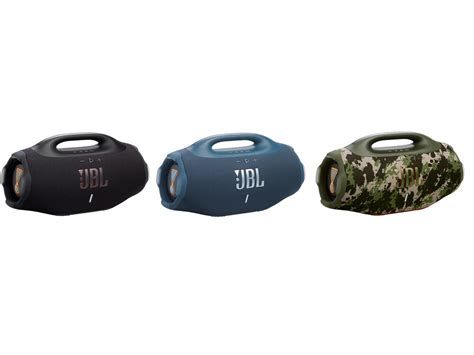
The Boombox 4, by comparison, is a rugged, oversized device with integrated handles or grippy surfaces and a visible array of speaker drivers and passive radiators. Its enclosure is designed to withstand being moved around and to project sound in open spaces; fabric, rubberized edges, and a durable grille are common design choices that favor resilience over refinement.
Sound profile and performance
Because of their differing acoustic goals, the two products deliver very different listening experiences. Earbuds like the Fidelio Fa3 typically present a tighter, more intimate soundstage with an emphasis on midrange clarity and instrument separation—qualities that help vocals and acoustic instruments shine during solo listening. Listeners who prioritize detail, critical listening, or low-volume fidelity often prefer this presentation.
The Boombox 4, on the other hand, is engineered to move air and create impact. Its tuning favors strong bass response and wide dispersion so that music translates well in rooms, parks, and gatherings. The emphasis is less on micro-detail and more on visceral enjoyment—dance tracks, rock, hip-hop, and any material where bass and dynamics enhance the experience.
Portability and everyday use
Portability is where the Philips Fidelio Fa3 shines. Earbuds fit in a pocket, the charging case protects them in transit, and they’re easy to use while commuting, exercising, or working in public. The Boombox 4 requires deliberate transport—a bag or vehicle space—and is best suited to planned outings, backyard parties, or indoor use when a larger sound footprint is desired.
Battery life and charging
Earbuds are judged by playtime per charge and how many top-ups the case provides; they often favor frequent short sessions and convenience over marathon playback. Portable speakers like the Boombox 4 are optimized for long continuous playback so that gatherings aren’t interrupted by charging. Buyers should consider how they listen: commuters and frequent travelers may value rapid case top-ups and quick-charge features, while people who host events prioritize long on-device runtime and the ability to connect to external power if needed.
Connectivity and features
Both product categories support Bluetooth, but there are differences in feature sets. Earbuds often add companion app support for EQ customization, firmware upgrades, and advanced features like active noise cancellation (ANC) and transparency modes. Speakers add features geared toward group use: multiple-device pairing, party or stereo modes, and sometimes auxiliary inputs. Given the Boombox 4’s role as a social speaker, expect simple pairing workflows and features that allow multiple people to take turns streaming.
Durability and outdoor readiness
Outdoor usage expectations differ: some earbuds focus on sweat and light splash resistance suited to workouts, while a boombox is expected to handle rougher outdoor environments and may include higher ingress protection ratings. Buyers who plan to use a device in the rain, at the pool, or on rough terrain should prioritize stated water/dust resistance and build reinforcements.
Looking for the best Audio & Headphones deals on Amazon?
View Offers →Call and microphone performance
For users who need hands-free calling, earbuds are typically equipped with microphones tuned for close-mouth voice capture and often include noise suppression for speech. While some larger speakers can function as speakerphones, their microphone arrays and voice pickup are less optimized for private calls and more suited to conference-style situations where multiple people need to be heard.
Pros & cons
Philips Fidelio Fa3
- Pros: Compact and pocketable for daily carry; suited for focused listening and commute use; typically offers refined midrange clarity; discrete appearance that blends into everyday life.
- Cons: Small drivers limit low-frequency reach compared with a large speaker; less suited to shared listening or outdoor parties; battery life depends on case cycles and short device runtime versus a large speaker.
JBL Boombox 4
- Pros: Powerful, room-filling sound and strong bass presence; designed for social use and outdoor gatherings; durable build and controls optimized for group use.
- Cons: Bulky to transport and store; overkill for private or near-field listening; may compromise on detailed midrange resolution compared with good in-ear monitors.
Side-by-side comparison
The following table provides a concise comparison across attributes buyers commonly evaluate. Entries are qualitative to reflect practical differences rather than precise numeric specifications.
| Attribute | Philips Fidelio Fa3 | JBL Boombox 4 |
|---|---|---|
| Form factor | True wireless in-ear earbuds with charging case | Large portable Bluetooth speaker with integrated handles |
| Primary use case | Personal listening, travel, focused music, commuting | Group listening, outdoor parties, home entertaining |
| Portability | Pocketable, lightweight | Bulky; requires carrying or vehicle transport |
| Sound emphasis | Clarity and detail, natural mids | Impactful bass, loud and immersive |
| Battery behavior | Multiple short sessions with case top-ups; convenient for daily use | Long continuous playback per charge for events |
| Durability | Often sweat/splash resistant for active use | Built to handle outdoor use and rough handling |
| Connectivity | Bluetooth with app support and personalization | Bluetooth with party/stereo modes and multi-device pairing |
| Best for | Daily commuters, solo listeners, in-office use | Hosts, outdoor enthusiasts, social gatherings |
Real-world use cases
Understanding how these products behave in typical scenarios clarifies which is the better fit for an individual's lifestyle.
Commuting and work
For subway rides, plane travel, or open-plan offices, the fidelity and isolation of earbuds like the Fidelio Fa3 make them the natur…Home listening and focused sessions
Audiophiles who want to hear subtle details at modest volumes will often prefer earbuds or headphones for their immediacy and controlled imaging. The earbud option also reduces room acoustics as a variable when comparing subtle tonal characteristics.
Outdoor gatherings and parties
The Boombox 4 excels in parks, patios, and backyard barbecues where multiple people are listening. Its ability to create an energetic low-end and deliver high sound pressure levels makes it ideal for shared playlists and group activities.
Exercise and active use
Active use splits along two axes: personal activity and group activity. For runs, gym sessions, and solo workouts, earbuds that stay secure and resist sweat are preferable. If a group workout or outdoor class wants shared music, the boombox is the obvious choice.
What buyers typically care about — and how to weigh those priorities
When deciding between a product like the Philips Fidelio Fa3 and a speaker such as the JBL Boombox 4, buyers should ask practical questions rather than focus only on brand or perceived value. Below are common concerns and how to think about them.
Will I use it alone or with others?
If the answer is "mostly alone," earbuds win for convenience and privacy. If the user plans frequent shared listening sessions, a boombox-style speaker meets that need better.
Discover deals on Audio & Headphones — updated daily.
See Deals →How important is portability?
Portability is not just about weight; it is about how often the user will physically move the device. Earbuds are inherently more mobile. A heavy speaker requires planning to transport and may remain stationary most of the time.

Do I want low-end impact or midrange detail?
Decide whether songs should translate with punch (favoring the speaker) or with micro-detail and vocal presence (favoring earbuds). Many listeners balance this with EQ or by keeping both types of devices in their collection for different situations.
Are calls and microphones important?
For frequent personal calls, earbuds with good voice pickup and noise suppression are superior. A boombox's speakerphone function is suitable for group conference calls or casual voice pickup, but it may not perform as reliably in noisy environments.
Does the user need weather resistance?
Consider IP ratings and the intended environment. Activities near water or heavy perspiration require higher resistance levels; verify manufacturer claims for each device accordingly.
How much does battery life matter?
For daily commuters, a dependable case and consistent short-session charging are valuable. For party hosts or outdoor use, uninterrupted multi-hour playback makes a significant difference. Match the battery behavior to the primary use case.
Buying guide — how to decide
The following checklist helps break down the decision into actionable steps:
- Define primary use: Start by stating where the device will be used most—commuting, home, outdoor gatherings, workouts, or mixed use. The best device is the one that fits the dominant context.
- Prioritize form factor: If pocketability and discretion matter, earbuds are preferable. If loud shared sound and bass matter more, choose a speaker.
- Consider feature needs: Make a list of must-haves: active noise cancellation, voice assistant support, multi-device pairing, waterproofing, or line-in support. Eliminate options that don't meet critical requirements.
- Test sound where possible: Listening in-store or with a sample track helps. Try music genres representative of daily listening—vocals, acoustic, electronic, and bass-heavy tracks—to gauge compatibility with the user's tastes.
- Check the ecosystem: Companion apps, firmware support, and warranty policies influence long-term satisfaction and the ability to tune the product to preference.
- Evaluate real-world metrics over marketing: Focus on how a product performs in contexts similar to the user's life rather than absolute numbers on packaging.
- Balance budget across use cases: It can be better to pair a modest set of earbuds with an affordable portable speaker than to overspend on one device that doesn't cover all needs.
Conclusion
The Philips Fidelio Fa3 and the JBL Boombox 4 exist in complementary parts of the audio landscape rather than directly competing niches. One delivers a personal, focused listening experience optimized for mobility and private enjoyment; the other is built to energize groups and move large volumes of air for outdoor and social settings. Choosing between them comes down to primary use, desired sound character, and lifestyle needs. Buyers who value portability, private calls, and detailed midrange will lean toward earbuds; those who host events and want impactful bass and loud playback will favor a boombox-style speaker. In many households, both device types make sense: each serves distinct listening scenarios and together cover a broader range of needs.